Flaggers play one of the most critical roles in any roadway work zone. They are the first line of defense between moving traffic and workers, equipment, and temporary lane changes. Effective flagging operations depend on visibility, proper positioning, and clear communication signals that minimize confusion for both drivers and crews. When flaggers are trained well and equipped properly, they create a safer environment for everyone passing through or working within the work zone.
Work zones reshape the normal flow of traffic, often with reduced lanes, shifting patterns, or temporary stops. Drivers rely entirely on the flagger’s instructions to navigate these unfamiliar conditions. Even a moment of miscommunication can lead to accidents that endanger workers and motorists. For this reason, flagging is not simply holding a paddle or waving a hand. It is a structured safety function that requires training, attention, and the right protective equipment.
Visibility is the foundation of safe flagging. Flaggers must stand out clearly in all light and weather conditions so drivers can recognize them well before they reach the work zone.
Required PPE includes:
High visibility garments meeting ANSI Class 2 or Class 3 standards, depending on speed limits and conditions.
Retroreflective striping providing 360 degree visibility.
Brightly colored hard hats, preferably outfitted with reflective banding.
Sturdy work boots with slip resistant soles.
Gloves that improve visibility during hand signals, especially in low light.
Night work requires additional visibility measures. Flaggers should use illuminated paddles or wands, and supervisors must ensure adequate lighting is directed onto the flagging station without causing glare for drivers.
Flagger placement is critical. A flagger who stands too close to traffic or too far from drivers cannot perform their job safely or effectively.
Key positioning guidelines:
Stand where drivers can see you clearly with enough stopping distance, based on the posted speed.
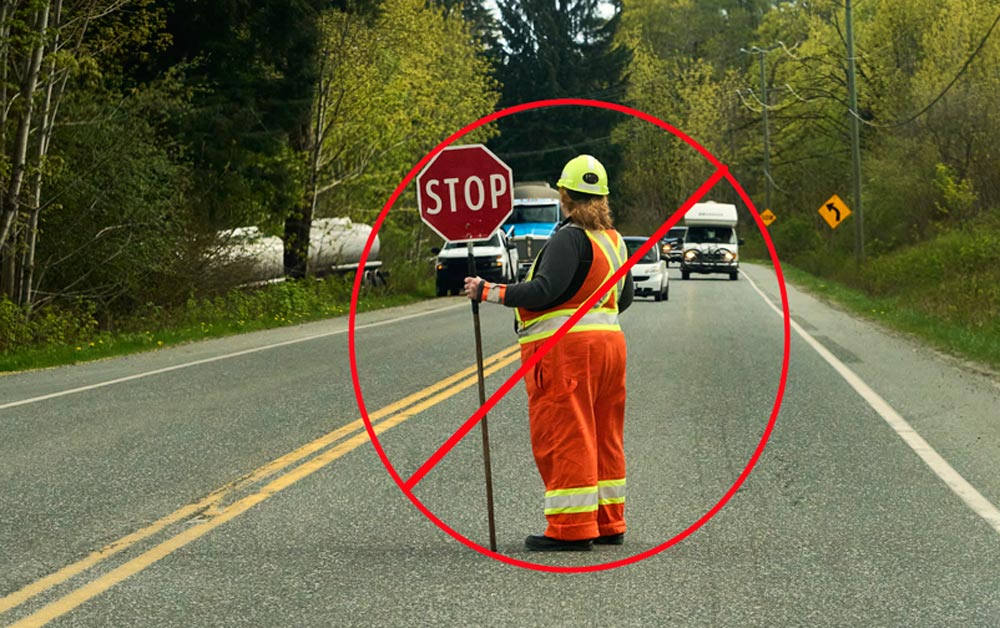
Remain on the shoulder or a safe staging area, never in the direct travel lane.
Face oncoming traffic directly, avoiding angles that reduce visibility.
Stay in communication with other flaggers when controlling two way traffic.
Position yourself so escaping from a hazard is possible, with a clear path away from traffic if a driver fails to stop.
Make sure the flagging station is not obscured by equipment, parked trucks, or curve geometry.
Flaggers should never turn their back to moving vehicles. Maintaining full awareness of both directions of traffic and work activities is essential.
Flaggers rely on clear, consistent signals that meet standardized work zone practices. These signals help drivers understand whether to stop, proceed, or slow down, reducing hesitation and confusion.
Standard signals include:
STOP: Hold the stop paddle toward traffic with the other arm raised.
SLOW: Hold the slow paddle toward traffic and use a gentle up and down motion with the free hand.
PROCEED: Turn the paddle to display the “slow” or blank side and motion traffic forward with a sweeping gesture.
EMERGENCY STOP: Wave both arms to get the driver’s attention if a vehicle fails to slow appropriately.
When hand signals are required, visibility is key. Slow, deliberate movements help drivers interpret instructions correctly.
Flagging often involves two or more flaggers who must coordinate flow for alternating directions. Miscommunication between them can create head on conflicts.
Best practices for flagger to flagger communication:
Use radios whenever possible to relay traffic flow status. (Flagger radios don't have to be $500 each. Your department can purchase inexpensive radios on Amazon or at Lowe's. Read their product reviews to ensure they will work at decent distances.)
Establish a simple communication protocol before the shift begins.
Confirm clear sightlines between flaggers when radios are not available.
Maintain awareness of queue lengths and adjust holding times to keep traffic moving safely.
Everyone in the work zone depends on the flaggers being synchronized and consistent.
Flagging is a high responsibility task that requires training, patience, and situational awareness. With proper PPE, strategic positioning, and standardized signals, flaggers guide drivers safely through work zones and protect the crews performing essential work. Departments that invest in regular flagger training and enforce visibility standards significantly reduce the risks associated with work zone traffic control.